EXPERT BENCH01
Qt developers, vetted past the tutorial.
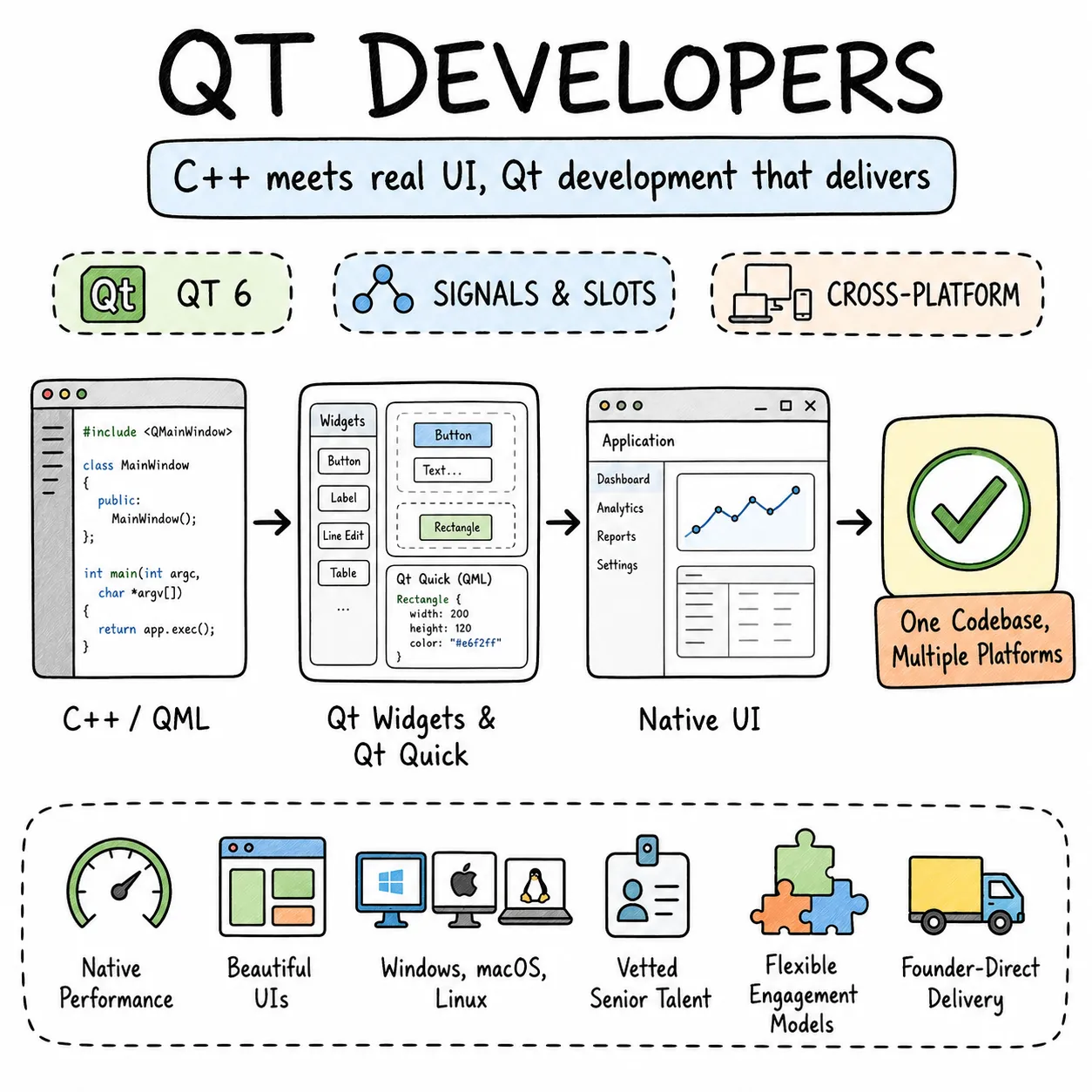
C++ proficiency, QML fluency, signal-slot architecture, model-view patterns, and shipped Qt applications across multiple platforms — that's the bar. Reading the Qt docs once doesn't clear it.

HIRE DEVELOPERS / QT DEVELOPERS
Most teams that need Qt discover the framework is easier to justify than to staff — C++ fluency plus deep Qt-specific patterns is a rare combination. Our Qt developers have shipped production C++/QML applications for industrial, enterprise, and consumer products across Windows, macOS, and Linux.
Qt Widgets or Qt Quick/QML, whichever a project needs — our Qt development work goes deep on signal-slot architecture, model-view patterns, custom widgets, and cross-platform builds with CMake and qmake, not just surface-level API calls.
C++ proficiency, QML fluency, signal-slot architecture, model-view patterns, and shipped Qt applications across multiple platforms — that's the bar. Reading the Qt docs once doesn't clear it.
A short match process, not a marathon. Embedded developers in days, with no interview gauntlet standing between you and someone who can start.
Full-time for a long-term desktop or embedded product. Part-time for a Qt 5 to Qt 6 migration. Hourly for an architecture review or a QML performance question. Sized to what you're actually facing.
UPDATED Q3 2026 - VERIFIABLE ON UPWORK - CLUTCH
600+
Combined projects shipped
PRODUCTION BUILDS
32
Startups built ground-up
$40M+ ARR COLLECTIVELY
100%
Senior engineers
NO JUNIOR HAND-OFFS
14d
Median time to first PR
AFTER KICKOFF CALL
11
Years compounding
7 COUNTRIES SERVED
C++ fluency layered on Qt-specific knowledge is what makes this framework hard to staff for — most desktop developers default to Electron or .NET instead. Ours have shipped Qt in production, where performance and cross-platform consistency actually get tested.
One Qt developer, full-time, owning the application end to end inside your standups — architecture through deployment, no split attention. Right for a desktop or embedded product built and maintained long-term.
Contact us for pricingTwenty hours a week — enough for a Qt 5 to Qt 6 migration, adding QML to an existing Widgets app, or keeping a shipped product maintained without a full-time seat.
Contact us for pricingA UI freeze nobody can trace, a multithreading bug in the signal-slot layer, a CMake build issue, a QML performance question — billed hourly, for exactly that.
Contact us for pricingMatch this to how your team already runs Qt work, or tell us and we'll pick.
Architecture, QML interfaces, CMake builds, deployment — all ours to own end to end, while you review weekly and steer the roadmap.
Your technical lead sets direction. Our Qt developer plugs into your repo, your CI, your standups, and writes the code.
Domain logic and product calls stay with your team. QML rendering, C++ performance, and cross-platform build issues become ours.
Deep C++ and systems engineering, not web development with a Qt tutorial finished last week — here's what goes into native desktop and embedded Qt work.

Current LTS Qt, for cross-platform native desktop and embedded work.
Declarative QML scenes for fluid, animatable interfaces.
The classic toolkit, still right for data-heavy interfaces and mature codebases.
An ultralight Qt runtime for microcontrollers and resource-constrained hardware.
Pre-integrated tooling for IoT and device product lines.
The same senior bench you'd be hiring — see recent case studies we've shipped.
All case studiesVerified feedback from Upwork, Clutch, and reference calls we're happy to set up before you sign anything.

CEO, Modestly
Entalogics has successfully delivered extension prototypes on time, and we are impressed with their project management and the finished product. The client communicates with Entalogics via virtual meetings, email, and messaging apps.

Founder, Flourish Schools
Collaborating with Entalogics was a great experience. Communication was clear, we aligned quickly, and their team delivered high-quality code on time with thoughtful technical decisions.

CTO, SentryBay
Their Chromium expertise helped us ship a hardened browser with live threat controls and enterprise rollout support. Security operations became significantly faster.

Founder, G3 Ventures LLC
Entalogics delivered our custom Electron browser in six months with isolated profile workflows and stable policy sync. Agent onboarding improved by 55% after rollout.

Project Manager, Sociall
Entalogics built our iOS Chromium-based mobile app with a smooth native feel, stable media rendering, and reliable sync. We shipped faster and improved engagement after launch.

RozmeriGPT
The web dashboard and Chrome extension now share prompts, billing, and analytics in one platform. Our content turnaround improved 4x after launch.
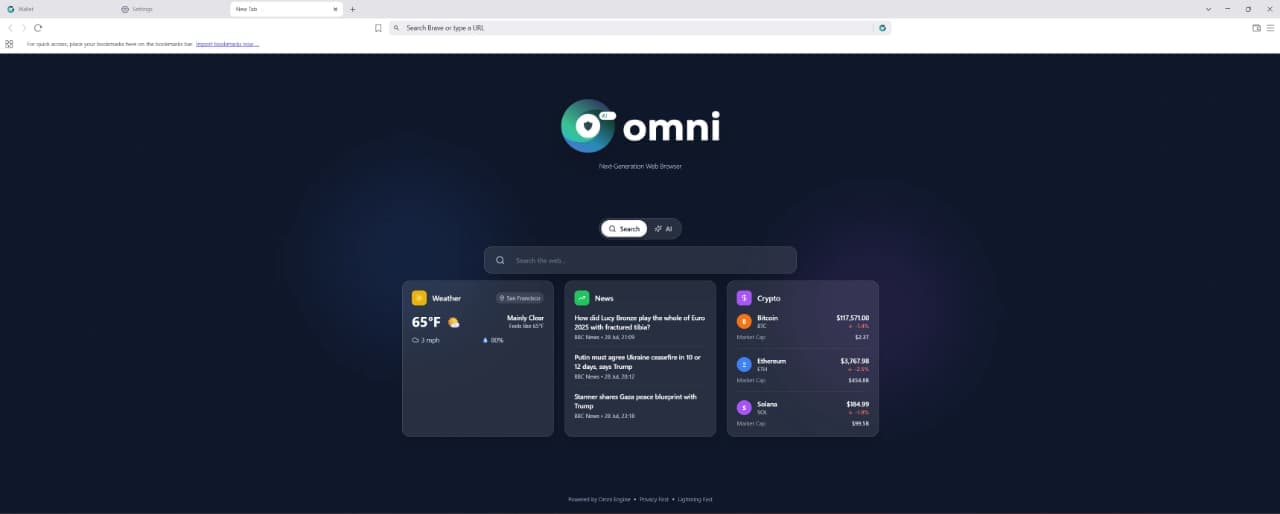
Project Manager, Omni Browser
Entalogics built our Omni Browser on top of Chromium with deep product-level execution. They implemented an integrated VPN and Omni Crypto Wallet directly in the browser, made strong architectural decisions, and delivered quality code on schedule with clear communication.

Project Manager, Digital Office: Aura
Entalogics built Digital Office: Aura as a custom Chromium-based authentication platform. Their team modified Chromium internals and integrated our manual custom authentication flow with reliable implementation, fast delivery, and consistent communication.
Adjacent services we often ship together with Qt work — same bench, same standard.
Seven questions we get on every first call about hiring Qt developers. If yours isn't here, we'll cover it first.
Tell us what your Qt project needs to do, and we'll walk you through what shipping it — performant, cross-platform, at a fair price — actually takes.