HIRE DEVELOPERS  /  MOBILE APP DEVELOPERS

Mobile appdevelopment thatsurvives real users.

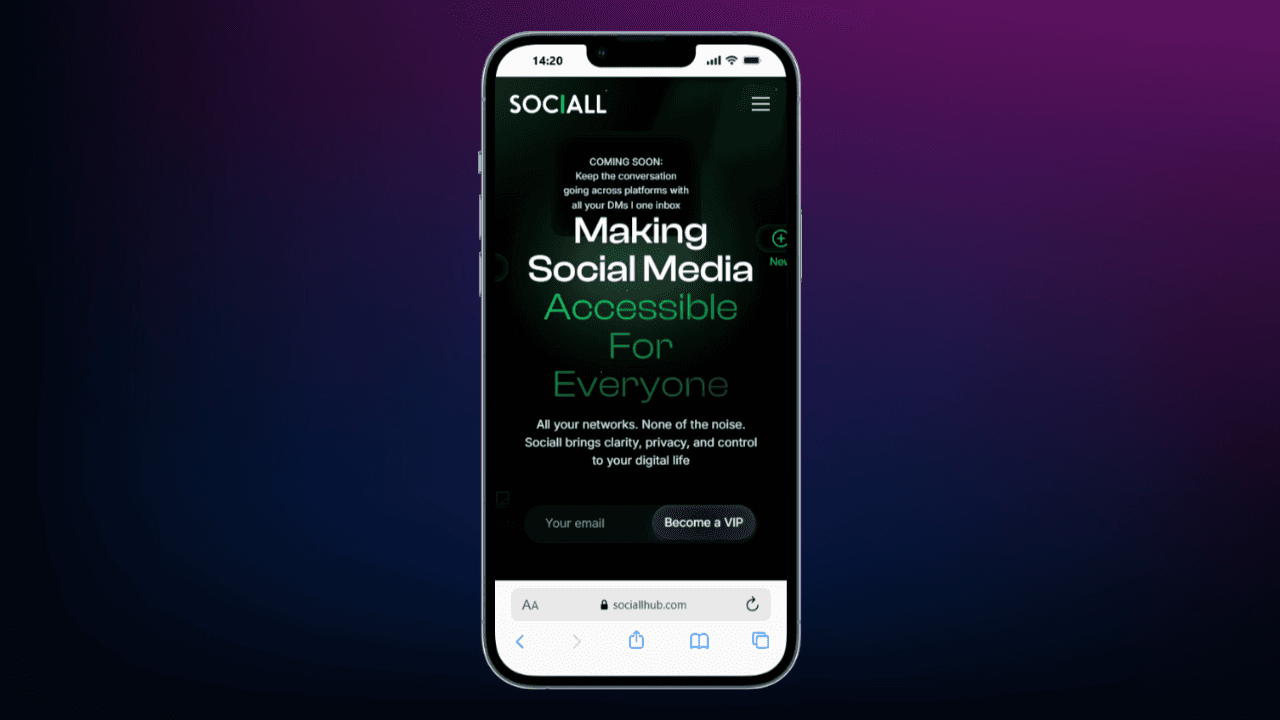
The Social iOS app and a Chromium-based mobile browser with reliable media rendering are already live in the App Store and Google Play — proof our mobile app development company ships to production, not just a simulator. Native iOS, native Android, or cross-platform Flutter and React Native: whichever your project needs, we've done it for real users.

Vetted senior talent
Flexible engagement models
Founder-direct delivery
Why Entalogics

Why teams hire
mobile app developers from us.

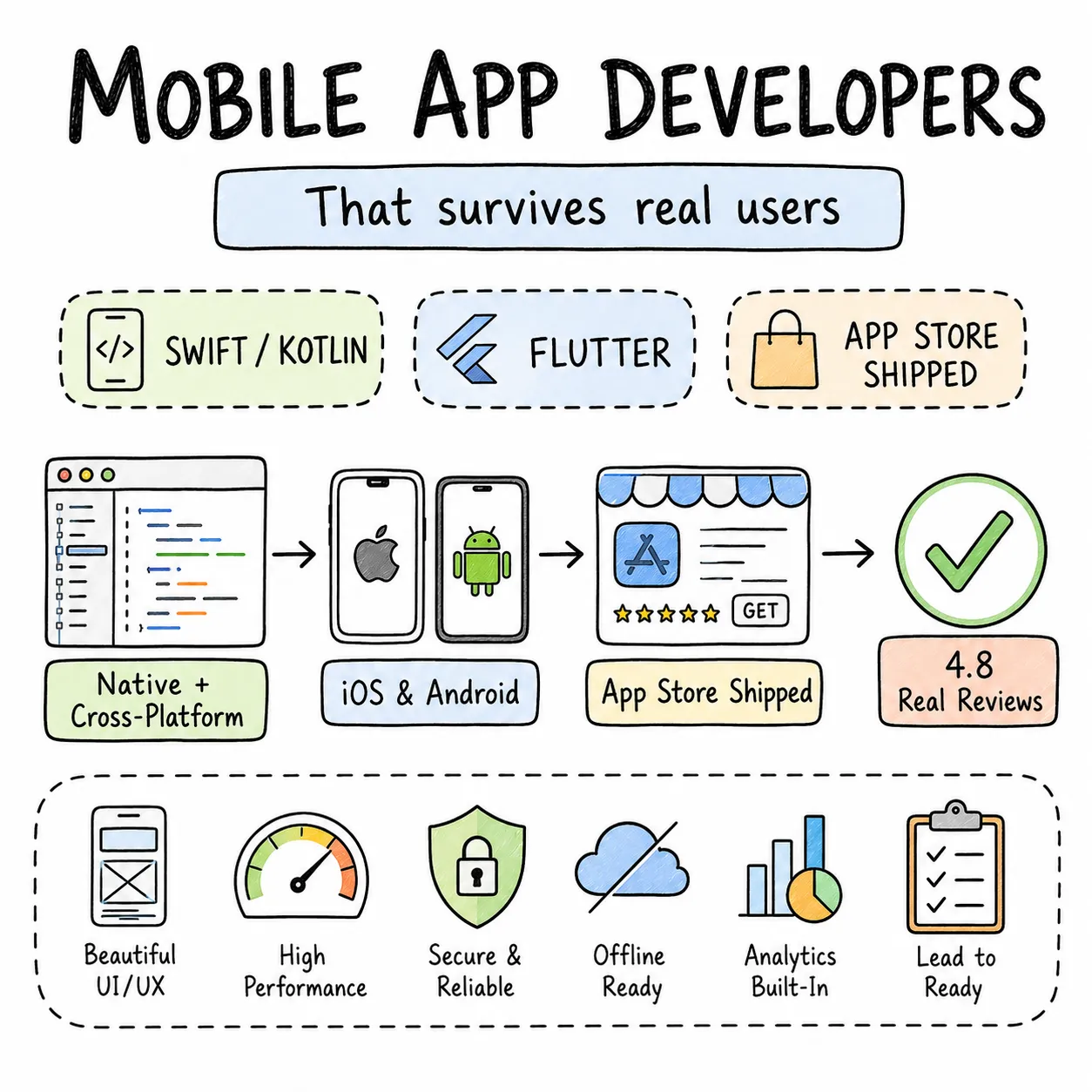
Swift and Kotlin for native work, Flutter and React Native for cross-platform — plus the mobile-specific problems that actually decide whether an app survives contact with real users: offline sync, push notifications, background processing, biometric auth, camera and GPS, and App Store review.

EXPERT BENCH01

Mobile app developers, only.

Every developer we place has shipped to the App Store or Google Play — not stopped at a simulator. SwiftUI or UIKit for iOS, Jetpack Compose or XML for Android, real production Flutter or React Native experience.

RIGHT STACK02

Matched to your platform, not just "mobile."

iOS, Android, Flutter, and React Native are four different skill sets wearing one job title. Ask for native Swift and you won't get a React Native developer with a resume padded to fit.

FLEXIBLE ENGAGEMENT03

Staff augmentation sized to what's real.

A dedicated mobile developer for a long-term product. A part-time specialist for App Store maintenance and OS updates. An hourly consultant for a rejection or a performance audit. Sized to which one is true.

Hiring model

Three ways
to staff your mobile build.

App Store rejections, background sync bugs, memory warnings on older devices, platform-specific crashes that only show up in production — mobile development looks simple until you hit exactly these. Our developers have shipped through real review cycles and fixed real device-specific bugs, not just built demo environments.

M01160h / mo

Full-time hiring

One mobile developer, embedded full-time, owning the app from architecture through store submission — inside your standups, your process. Right for a team where the mobile app is the core product.

M0280h / mo

Part-time hiring

Twenty hours a week — enough to maintain a published app: OS updates, crash fixes, features between major releases, keeping the App Store and Play Store listings current.

M0340h blocks

Hourly hiring

An App Store rejection, a performance profile on low-end devices, a push notification architecture review, a native-to-cross-platform migration assessment — targeted mobile app consulting, scoped and delivered.

Engagement models

Who runs
the project.

Match this to how your team already runs mobile work, or describe your situation and we'll suggest one.

01

Entalogics managed team

Mobile architecture, UI development, device testing, App Store and Google Play submission — all ours end to end. You review weekly builds through TestFlight or Play Console.

  • PM + senior mobile devs on staff
  • We own the release pipeline
  • TestFlight / Play Console builds weekly
02MOST COMMON

Client managed team

Your product lead sets priorities. Our mobile developer joins your Slack, your Jira, your standups, writes the code, and handles store submission — you direct the product.

  • Embedded in your Slack & Linear
  • Reports into your product lead
  • Same hiring bar — you direct
03

Hybrid model

Backend APIs and product decisions stay with your team. UI, native integrations, device testing, and store submission become ours.

  • Specialists from us, generalists from you
  • Shared standups + design reviews
  • Clear DRI per platform
Stack & tooling

The stack our mobile
app development team ships with.

Native and cross-platform expertise in one bench — what our engineers actually work with, daily.

Swift

Native iOS apps with ARC memory model and platform frameworks.

SwiftUI

Declarative layouts and state-driven interfaces on modern iOS releases.

UIKit

Mature iOS UI patterns, storyboards, and custom controls where needed.

Kotlin

Native Android development with coroutines and Jetpack libraries.

Jetpack Compose

Declarative Android UI with less XML and faster iteration on mobile surfaces.

React Native

Cross-platform delivery with native modules when platform depth is required.

Flutter

Single codebase for iOS and Android with performant custom rendering.

Dart

Language paired with Flutter for typed async mobile and plugin development.

Related work

You might
also need.

Adjacent services we often ship alongside mobile app work — same bench, same standard.

COMMON QUESTIONS

Straight answers.

Six questions we get on every first call about hiring mobile app developers. If yours isn't here, we'll cover it first.

Native (Swift/Kotlin) when you need deep platform integration — HealthKit, ARKit, widgets, background processing, or performance-heavy rendering. Cross-platform (Flutter/React Native) when iOS and Android need to ship from one codebase and the app is content-driven or transactional. Most business apps in 2026 move faster and cheaper on cross-platform — we'll tell you honestly which one is true for yours.
Yes. Native iOS in Swift, native Android in Kotlin, or both platforms from one Flutter or React Native codebase. We don't default to cross-platform just because it's easier to staff — we recommend whichever matches your product and budget.
MVP in 8–12 weeks, feature-complete v1 in 12–20 weeks. Platform count, integration complexity, and how much custom UI is needed move that number. First App Store submission adds 1–2 weeks for review.
Yes — App Store Connect and Google Play Console setup, screenshots, privacy policy, and submission, including apps that handle sensitive data, like HIPAA-relevant healthtech products. We know the common rejection reasons — missing permission justifications, unclear metadata, incomplete privacy disclosures — and head them off before they cost you a review cycle.
Yes. We audit the existing codebase, assess architecture quality, then add features on top — flagging upfront if the codebase needs refactoring before new features are safe to build on.
Both. Most mobile apps run on Firebase or Supabase as the backend — fast, managed, cost-effective. Custom backend needs get built with Node.js, Python, or .NET APIs the app consumes. One team owns both ends.
Founder-direct

Ready to build
something amazing?

Tell us what your mobile app needs to do, and we'll walk you through what shipping it — to real users, past real review — actually takes.