Incident
Database goes down in production. Last tested backup is 8 months old. Restore takes 6 hours. Customers notified by email.
Prevention
Automated daily backup with weekly restore drill. RTO under 1 hour. Recovery procedure in the runbook.

We deliver cloud DevOps services that make every release predictable, every environment stable, and every incident fast to resolve — with CI/CD pipelines, production-grade cloud infrastructure, and observability built right from day one.
Based on 100+ Reviews
100+ Reviews
Why Entalogics for DevOps
The reasons clients pick us, in their own words. Each one is something most agencies will swear they do — and most don't.
Broken pipelines cost more than bad code. Every deployment automated, tested, and gated so your team ships with confidence instead of anxiety.
Monitoring, alerting, and distributed tracing configured from day one. You find out about the problem from PagerDuty, not from a customer tweet.
No click-ops, no tribal knowledge, no 'only Dave knows how that works.' Every resource in Terraform, every environment reproducible from a single command.
Your AWS, GCP, or Azure account. Your credentials. Your data. We configure it, document it, and hand it back. No lock-in to our tooling or our access.
Infrastructure scorecard
Here is what most startups are running. And what we deliver.
Preventable disasters
Every one of these has happened to a funded startup in the last 12 months. Every one was preventable.
Database goes down in production. Last tested backup is 8 months old. Restore takes 6 hours. Customers notified by email.
Automated daily backup with weekly restore drill. RTO under 1 hour. Recovery procedure in the runbook.
AWS bill hits $40,000. Finance asks questions. Nobody knows why. Turns out it was an orphaned NAT Gateway running since the last engineer left.
Cost anomaly alerts fire within 24 hours of unexpected spend. Monthly rightsizing review. Every resource tagged to a team and a purpose.
Deploy breaks production at 6pm on a Friday. Rollback takes 45 minutes. Founder calls three customers personally to apologise.
Blue-green deployment with automated smoke tests. One-command rollback to the previous version. Zero-downtime releases on every deploy.
The engineer who built the infrastructure leaves. Nobody else knows how it works. Three months of tribal knowledge gone. Next incident takes twice as long to fix.
Every resource in Terraform. Every decision in an architecture decision record. Runbooks written, reviewed, and tested by the whole team.
Enterprise client requests a security audit before signing. No IAM policies. Shared root credentials. No audit logs. Deal lost. Six months of sales work gone.
IAM audit in week one. Least-privilege access enforced. Audit logs enabled. SOC2 readiness documented before the first enterprise conversation.
What we solve
Cloud infrastructure, CI/CD, cost control, and site reliability engineering — scoped to the problems that keep CTOs up at night.
AWS cost optimisation
23%
We have audited infrastructure at over 30 companies. Here is what we find every time.
EC2 instances nobody is using, unattached EBS volumes accumulating charges, load balancers pointing at nothing, S3 buckets storing data nobody has accessed in two years.
m5.2xlarge instances running at 8% average CPU because nobody right-sized after the initial launch spike. The fix takes 20 minutes. The savings run for years.
Paying on-demand rates for baseline workloads that run 24 hours a day, 7 days a week. Reserved instances and savings plans for predictable workloads cut these costs by 40–60%.
Inter-AZ traffic, NAT Gateway charges, and egress costs that nobody tracked when the architecture was designed. Often the third-largest line item on the bill.
Dev and staging environments sized like production, running around the clock, costing as much as the production workload itself. Scheduled shutdown saves 65% on non-production costs.
Nobody knows which team, feature, or customer is driving which costs. No tags means no accountability, no forecasting, and no way to make intelligent architecture decisions.
Our first cost audit pays for itself. Usually within the first month.
SLA
Every engagement includes defined response times. Not best-effort. Contractual.
Verified feedback from Upwork, Clutch, and reference calls we're happy to set up before you sign anything.

CEO, Modestly
Entalogics has successfully delivered extension prototypes on time, and we are impressed with their project management and the finished product. The client communicates with Entalogics via virtual meetings, email, and messaging apps.

Founder, Flourish Schools
Collaborating with Entalogics was a great experience. Communication was clear, we aligned quickly, and their team delivered high-quality code on time with thoughtful technical decisions.

CTO, SentryBay
Their Chromium expertise helped us ship a hardened browser with live threat controls and enterprise rollout support. Security operations became significantly faster.

Founder, G3 Ventures LLC
Entalogics delivered our custom Electron browser in six months with isolated profile workflows and stable policy sync. Agent onboarding improved by 55% after rollout.

Project Manager, Sociall
Entalogics built our iOS Chromium-based mobile app with a smooth native feel, stable media rendering, and reliable sync. We shipped faster and improved engagement after launch.

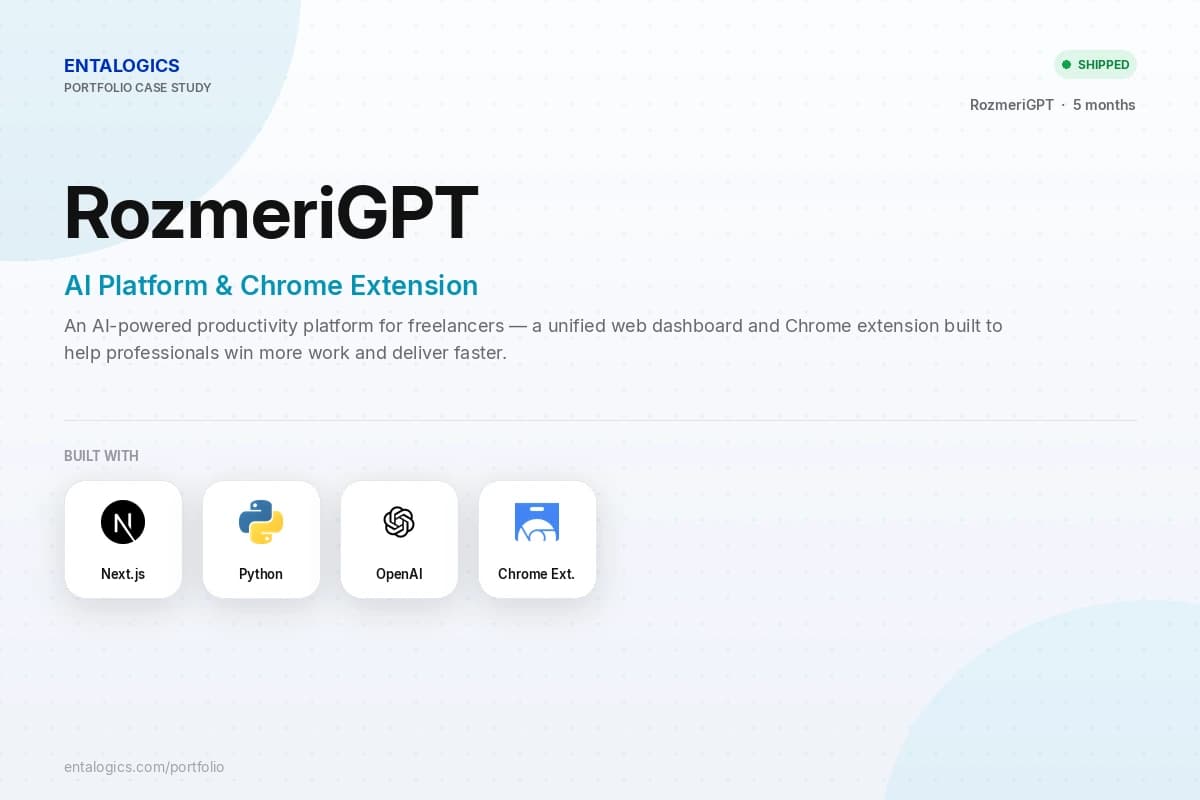
RozmeriGPT
The web dashboard and Chrome extension now share prompts, billing, and analytics in one platform. Our content turnaround improved 4x after launch.
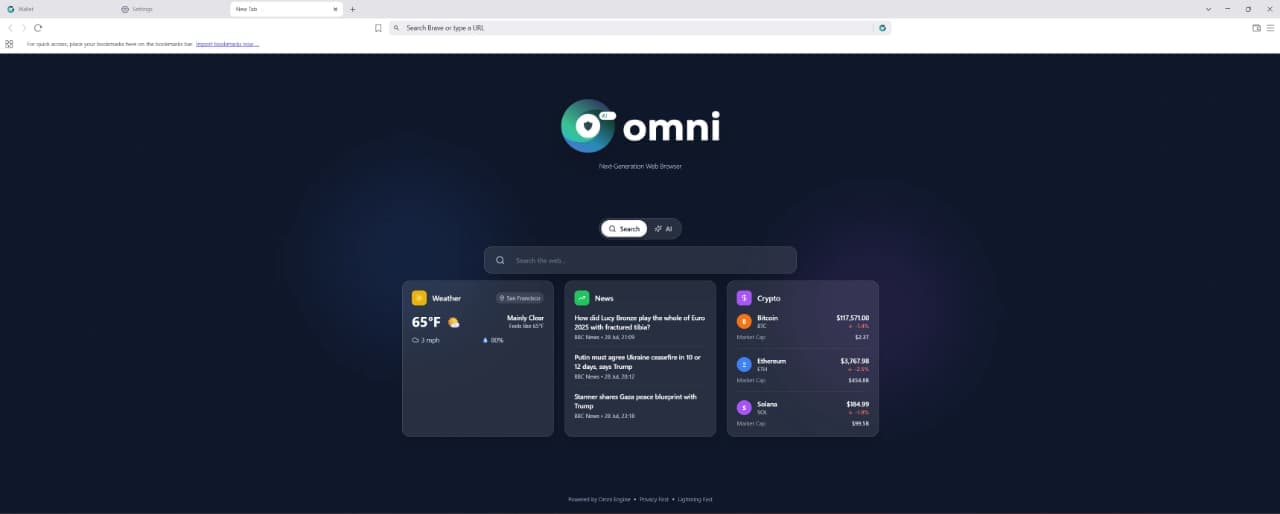
Project Manager, Omni Browser
Entalogics built our Omni Browser on top of Chromium with deep product-level execution. They implemented an integrated VPN and Omni Crypto Wallet directly in the browser, made strong architectural decisions, and delivered quality code on schedule with clear communication.

Project Manager, Digital Office: Aura
Entalogics built Digital Office: Aura as a custom Chromium-based authentication platform. Their team modified Chromium internals and integrated our manual custom authentication flow with reliable implementation, fast delivery, and consistent communication.
Engagement shape
A typical cloud DevOps engagement — audit first, Terraform and CI/CD before optimisation, SOC2 readiness before enterprise sales.
Stack
Terraform, Kubernetes, GitHub Actions, and observability tooling chosen for production reliability — not whatever was trending on Hacker News last week.
Engagement
Pick the lane that matches your stage. Every path starts with clarity on reliability, cost, and security — not a black-box managed service.
For founders and CTOs who suspect their infrastructure is not production-grade
A full infrastructure audit covering reliability, security, cost, and deployment process. Scored against the 10-point checklist. Prioritised improvement roadmap delivered at the end.
Scale-up that needs ongoing infrastructure support and improvement
Senior DevOps engineers embedded in your Slack, your GitHub, your incident response. Infrastructure improvements, cost optimisation, and reliability work every sprint.
Enterprise or regulated verticals
For companies preparing for SOC2, HIPAA, or enterprise security audits. Full compliance readiness, documented architecture, and procurement-friendly contracts.
Related work
Security, support, and cloud-platform pages that pair with a DevOps engagement.
Senior engineers
Free 30-minute call with a senior DevOps engineer. By the end you'll have a scored infrastructure picture, cost risks, and a realistic hardening plan — whether you hire us or not.